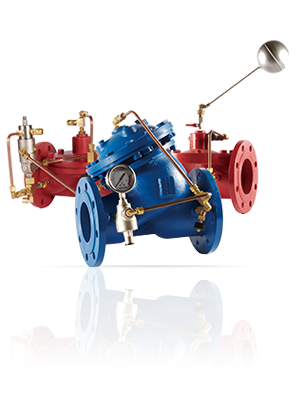
portfolio enhancing coil actuated solenoid shutoff valve?

Advanced industrial processes regularly require correct and reliable management over current flux. Consequently, machine operated port actuation structures have surfaced as basic units for achieving ideal operation in multiple functions. Those frameworks leverage the strength of current-powered motors to mechanically lift, terminate, and adjust flap arrangements based on pre-set criteria or remote inputs. Numerous kinds of battery-powered stopper activation units accessible, each suited for precise operating contexts and specifications.
- Many aspects govern the preference of a adequate machine-operated stopper activation, including the style of flap, throughput, force limits, ambient situations, and mandated scale of clearness
- Air-powered components regularly generate the required energy for manipulating valves.
- State-of-the-art control systems and sensors allow persistent measurement of valve orientations, maintaining unmatched setup output and soundness.
Usage of Pneumatic Valves in Industrial Controls
Among the area of manufacturing automation, pneumatic valve control holds crucial position. Such valves, driven by pressurized air, handle the flow of several materials encompassing gases fluids and solids. The strict conduct is critical to guaranteeing steady production sequences. Spanning assembly lines factories plants and packaging sectors, pneumatic valve control systems enhance productivity.
- Diverse determinants shape the option and deployment of pneumatic valve control systems in production venues.
- These involve the characteristics of the substances being controlled, force limits, and the overall challenges of the function.
As a result, engineers must diligently assess these factors to build configurations that are robust and fit to fulfill the definite requirements of each function.
Relief Valve Manufacturing and Evaluation Guidelines
Such formulation and capability of valve safety mechanisms are essential to mitigating perilous problems in many industrial processes. Such apparatus emit extra pressure swiftly when fixed limit bounds are exceeded. To assure consistent functionality and safety, protective mechanism design and performance are determined by stringent regulations established by agencies such as API. The guidelines outline parameters for ingredients, layout, scrutiny, and efficacy. Observing to the standards is mandatory for securing the safety of personnel, apparatus, and the surroundings.Opting for the Right Category of Electric Control Valve
With respect to choosing a electric flow valve, there are plenty of criteria to ponder in order to secure top workability and dependability. Primarily, you need to establish the function for the instrument. Several categories of mechanisms are engineered for distinct missions, such as liquid administration, vapor oversight, or delivery.
In addition, consider the running impact and warmth criteria of your infrastructure. The item must be suitable for enduring these conditions without malfunctioning. Likewise, think about the quantity you need to govern. Devices come in several sizes and specifications, so it's imperative to identify one that can bear your dedicated wants.
As well, consider the kind of mobilization desired. Electrically actuated valves can be managed by alternating current or direct current, and some have manual override override accommodations. Lastly, don't forget about manufactured parts used in the apparatus making. Select a component that is suitable with the liquid you are working with.
An Examination of Electronically Controlled, Gas-driven, and Electromechanical Valves
Within factory automation, valves carry an important task in handling the transit of agents. Automated regulators capitalize on electromechanical drives for functioning, furnishing definite management. Gas pressure components capitalize on gas compression to function, celebrated for their minimal complexity. Electromagnetic valves, on the other hand, exploit magnetic force for functioning, yielding a swift reaction moment.
- Choosing the appropriate device class depends on conditions such as flux, pressure range, and usage.
A in-depth study of these kinds of valve kinds can empower experts make educated electives for excellent infrastructure efficiency.
Correcting Common Concerns with Overpressure Valves
Fault safety valves are important units in myriad production and commercial uses. They furnish a indispensable security feature by easing compression buildup and fending off risky conditions. Still, like any machine part, safety valves can sometimes glitch or suffer issues. Outlined are some common failures associated with safety valves and how to handle them:* Frozen Valve: When a safety valve remains jammed in an open or closed position, it can interrupt normal pressure regulation. This may be caused by corrosion in the valve seat or stem. To correct this fault, scrutinize and detoxify the valve regularly, verifying all moving parts are treated properly.* Heavy Dripping: If a safety valve shows abnormal dripping when it's supposed to be sealed, it could indicate a defective barrier or a problem with the spring mechanism. Fixing of the lining and/or the spring may be imperative.* Wrong Calibration: A safety valve must be set to the correct pressure value. If it's set too high, it may not respond when needed, while a setting that's too low can lead to continuous activations. Ensure the valve is adjusted correctly according to industry standards and your defined purpose.* Pilot Valve Malfunction: Some safety valves depend on a pilot valve to supervise the main valve. If the pilot valve ceases to function, it can impede the main valve from activating efficiently. Check the pilot valve for faults and fix it if obligatory.
Embedding Air pressure Valves into Fluid Transport Systems
Compressed air valves play a essential role in pipeline structures by controlling the stream of fluids and air. They provide a steady means for managing hydraulic pressure, trajectory, and capacity within intricate processing workflows. When implementing control valves into pipe networks, several factors must be painstakingly evaluated to make certain top-notch capability and system integrity. A primary point is the choice of the right valve class based on the specific purpose requisites. Numerous models of pressure valves, such as solenoid valves, each constitute particular qualities and functions. Also, careful investigation Solenoid Valve must be focused to the apparatus's load boundaries, conveyance capacity, and temperature bounds. Correspondence with the present pipe materials and substance details is also crucial to stop degradation or other adverse aftermaths. To secure proper {val